
Europe's 400 Unicorns Reveal a Scaling Problem
The EU INC proposal addresses market fragmentation that blocks European startups from competing globally

Europe now has more than 400 unicorns, a 3x increase since 2018. The United States has 750, including eight of the top 10 highest-valued companies globally. The gap reveals Europe’s core challenge: we create startups but struggle to scale them. The root cause is structural; market fragmentation creates friction at every stage of growth.
The EU INC Proposal
EU INC is a grassroots movement advocating for a ‘28th Regime’—a unified company structure that operates across all EU member states. Since launching in October 2024, the proposal has attracted over 18,000 supporters and formal Commission attention. The goal is to create a favourable operating environment for new growth companies based in Europe that aim to serve a larger market than their home country.
The proposal includes:
Standardised company structure: an EU-wide company type with harmonised corporate governance, capital and share capital maintenance rules.
Digital-first approach: A fully digital registry, a dashboard, and standardised investment documents.
EU-FAST investment: A new, standard, open-source investment instrument inspired by convertible instruments such as SAFEs and BSA AIRs
EU-ESOP: an EU-wide employee share option scheme with standardised rules.
The focus of this post is not on the proposal itself, but rather on the current significance of this initiative.
Three Forces Driving Urgency
Three converging forces make this moment critical for European tech:
Capital fragmentation blocks scale. European startups navigate 27 different legal systems to raise Series B funding. Consider a Berlin-based startup raising €20M from investors across France, Sweden, and the UK: it must establish legal entities in multiple jurisdictions, navigate different securities regulations, and manage varying tax treatments for employee equity. Legal costs alone can exceed €100K—capital that could fund product development.
The AI window is closing. Europe missed the internet platform era (Google, Facebook), the mobile revolution (iOS, Android ecosystems), and cloud infrastructure buildout (AWS, Azure). The AI disruption represents the first major technology shift where European startups have simultaneous access to the same tools as Silicon Valley. But that window won’t stay open for very long. Capital velocity determines who captures market share.
Political momentum exists. Commission President Ursula von der Leyen’s October commitment to ‘one single and simple set of rules all over our EU’ signals genuine institutional appetite for change. The startup sector now represents 15% of EU GDP—too significant to ignore during economic restructuring
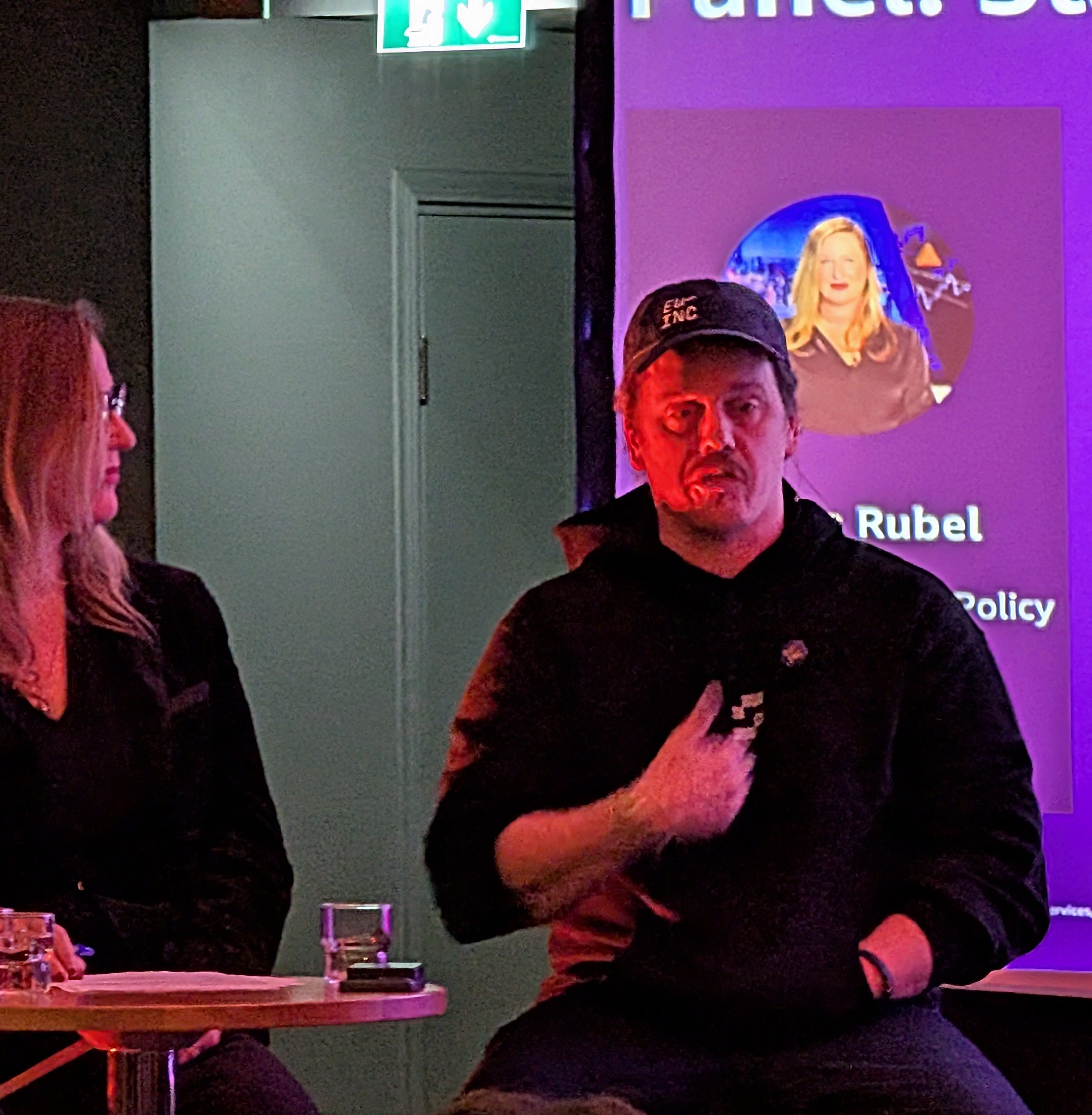
This alignment became clear during Slush week in Helsinki, where European competitiveness dominated every conversation. At Atomico’s State of European Tech 2025 launch event in the city’s ‘Unicorn Block’, Andreas Klinger—the angel investor behind EU INC—made the case that Europe cannot afford to miss another technology wave. EVP Henna Virkkunen reinforced this at Slush, promising the Commission would prioritize better access to capital and streamlined regulations
The Path Forward
The Commission’s spring 2026 proposal will reveal whether Europe has the political will to match its entrepreneurial ambition with institutional reform. EU INC won’t solve all of Europe’s scaling challenges, as language barriers and cultural fragmentation remain. But it addresses the foundational friction that prevents European startups from competing on equal terms.
Individual action matters. The movement has 18,000 supporters because founders, investors, and operators across Europe recognise the stakes. You can contribute by:
Signing the petition.
Spreading the word through these resources.
Supporting the movement by buying a t-shirt.
Tracking the Commission’s progress toward the spring 2026 deadline.
The question isn’t whether a single regulatory reform can transform European tech. March 2026 will show whether Europe can move from ambition to action.