
AI Market Research Face-Off: Which Tool Actually Delivers?
How Different AI Tools Handle Market Research

Lately I have been busy with doing market research for multiple product lines and businesses. This is table stakes for a product team, and I have done it many times, but this time I was lacking the team and time. Instead of opening Google, I did what Steve Jobs would say:
Think different!
Doing market research online is a fairly straightforward task; you read everything you can find, process what you read, write it down, and then read some more. The challenge is the amount of material. Back in the day when Google was young and your reading speed was limited by your modem bandwidth, reading ‘everything’ about a certain market was not totally impossible. But today, the amount of data is enormous on any topic. Another issue is that there is a wide range in the quality of the data, and it is difficult to know the quality until you read it.
So, I went the other direction and decided to use LLMs to expedite the task and finish in a reasonable time. Here is my experience of using Claude, Gemini, Genspark, and Manus for market research. For the record, I used free versions of Claude, Manus, and Genspark. For Gemini, I used the subscription that comes with Google Workspace. Note also that this evaluation is only for the task of doing market research. No other skills were tested.
Gemini
Google’s Gemini has been winning benchmarks with its latest mode, 2.5, which made Gemini my first choice. I was also interested in how the Gemini Deep Research would handle market research. I entered my prompt first to the normal 2.5 Pro model. Although it does a decent job of answering direct questions, I felt that this was insufficient. So I moved to Deep Research.
One advantage of Deep Research is that it lists the task first and requests confirmation before starting the research. This enables you to review your request for Gemini's assistance before beginning the work itself. Given that the research will take minutes or even hours, it is worthwhile to carefully read and reevaluate the assignment.
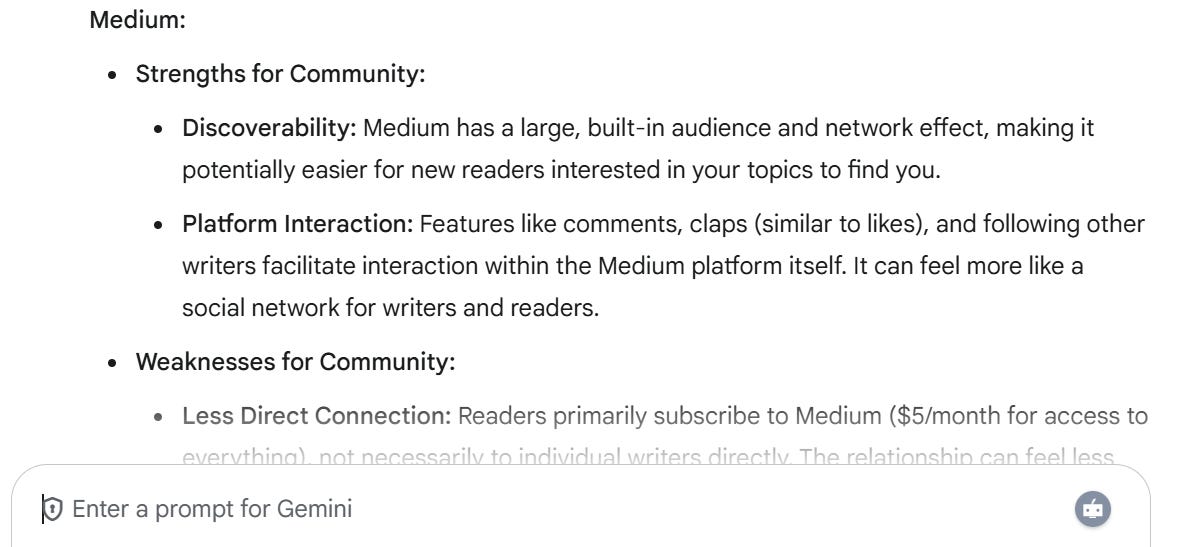
I asked Gemini Deep Research to go find 20 companies in a certain business, find their financials, and list product features, strengths, and weaknesses. Pretty basic stuff for market research, but manually this can easily take a week or two. Gemini said thank you and started reading hundreds and hundreds of web pages, financial reports, research papers, etc. When Gemini was done after about an hour, this appeared even more hopeful. It started printing data about companies until it stopped at company “J.” This was the 10th business to evaluate for my prompt, but this was too much even for Gemini DS. I asked it to continue. Gemini tried, but it never recovered. End of research with Gemini.
The output from Gemini was thorough, and that was part of the problem. For effective market research, you want to get the data right and then summarize on a higher level. Since Gemini Deep Research digs deep and provides reports on every detail, it appears to be more appropriate for academic studies. Extra credit for reading hundreds and hundreds of documents for the research.
Score 3 out of 5 stars. (Would be 4 stars if it had finished the research.)
Genspark
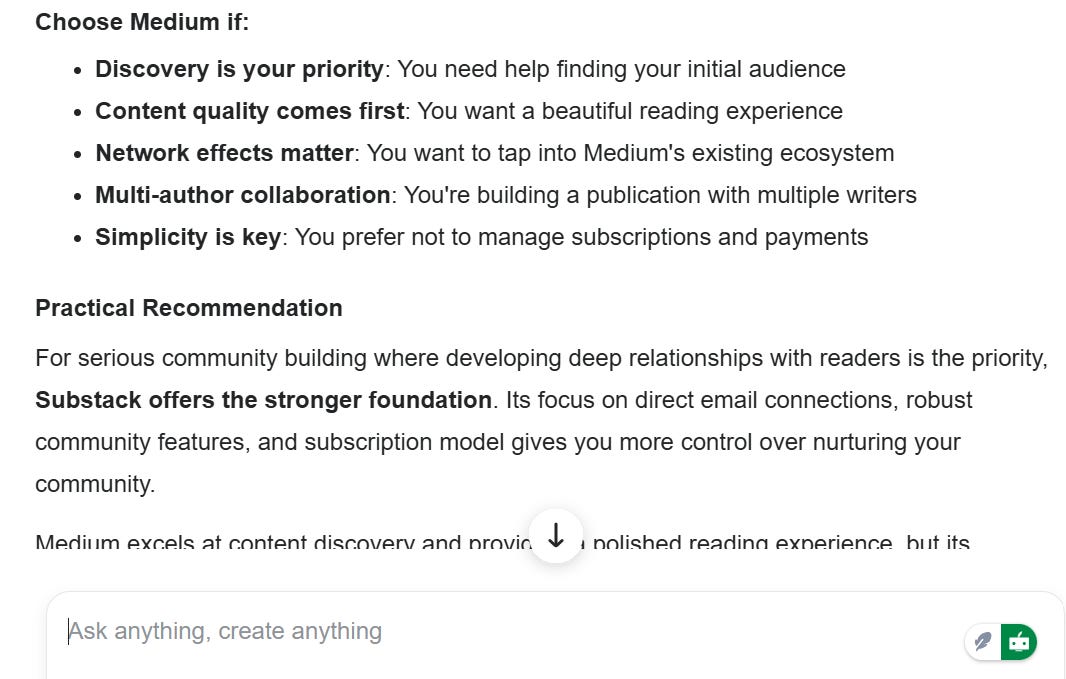
The next one to try was Genspark, which is positioned as “agentive search,” which describes it pretty well. After entering your prompt, Genspark does several searches and then combines the results, but compared to Gemini, it does not do that much “thinking” but does aggregate the results in a nice summary. If you give a simple task like “What is ProductX,” the output is merely a summary of the productx.com website. But when you ask a more strategic question, Genspark does a fairly good job of collecting relevant data and then doing a nice summary; thus, it is a good tool for market research.
4 stars.
Manus
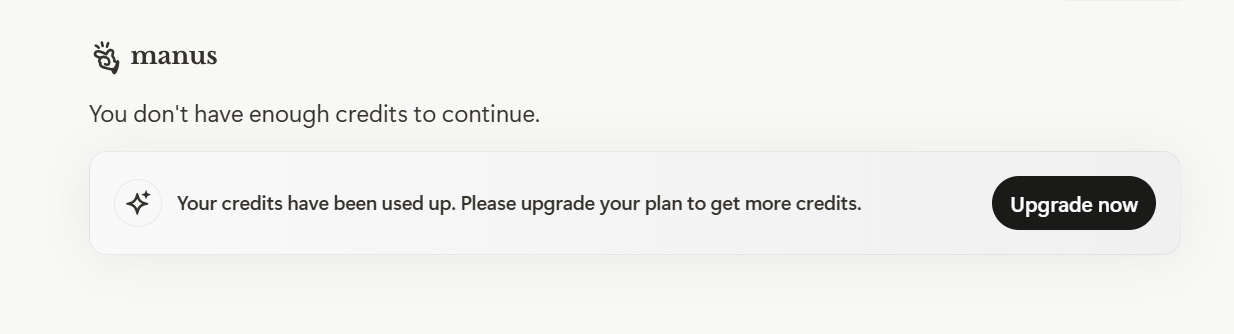
From the tested sites, Manus is the odd one in the test group, as it comes from China and is built by Chinese startup Monica. From the first experience, it felt exactly what I wanted: a true workhorse that searches every corner and condenses results on the right level. I was very impressed with Manus and able to obtain satisfactory answers to my questions until my credits ran out.
Manus has credit-based pricing, and once you run out of credits, it simply stops. This happened to me all of a sudden in the middle of research. That was the end of the honeymoon with Manus. I recognize that services must be paid for, but from the perspective of the user, the problem is that it is impossible to forecast how many credits a task will require. Anh Tho Chuong wrote a good piece about this problem this week at

To give you an idea of the costs, my market study of 20 companies required about 1000 credits. The monthly fee of $39 contains a maximum of 3900 credits.
Score 3.5 stars. (4.5 or maybe even 5 stars before I ran out of credits).
Claude
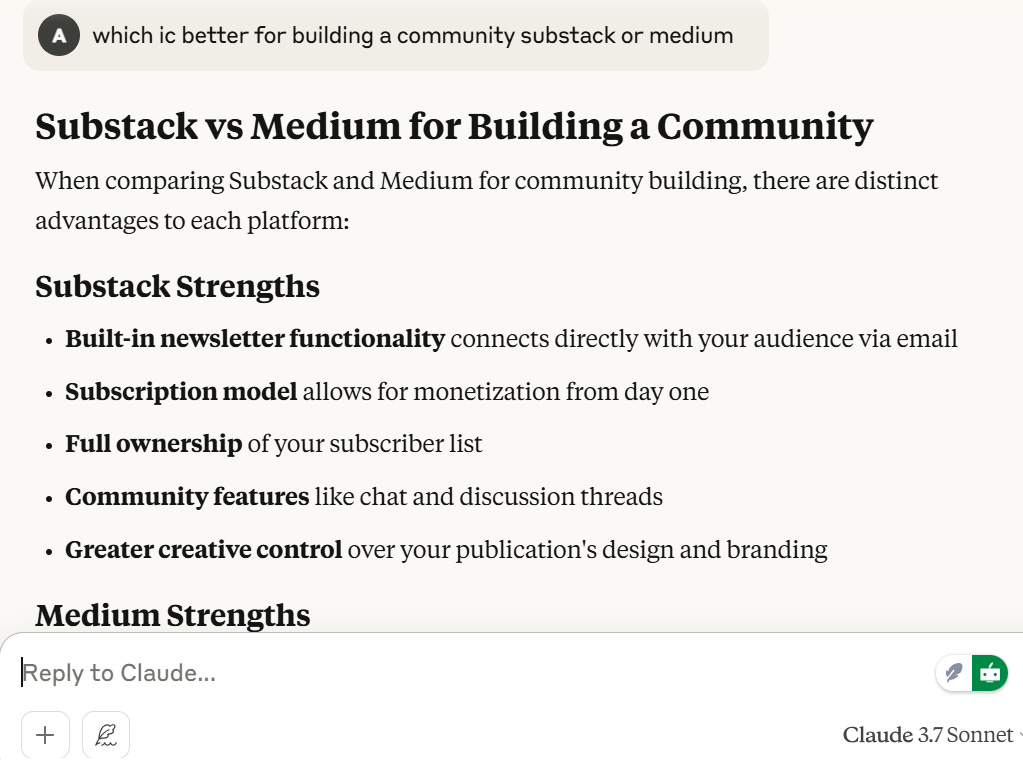
At the time of writing, the most intelligent model with Claude is the 3.7 Sonnet. I tested it after I got frustrated with Gemini. Nowadays, it should not be a barrier to trying a tool because testing it is so simple. So I signed in with Claude, checked that it was using the latest model, and entered my prompt. Claude started spitting out well-thought-out bullet points that were just on the right level. I felt that I had arrived home after a frustrating experience with Gemini, and after doing more work with Claude it became my go-to tool for market research.
Score 5 / 5
Conclusion: The AI Market Research Landscape
After testing multiple AI tools for market research, the differences between them became clear. While each platform has unique strengths, Claude emerged as the standout solution for efficiently processing market data at the right level of detail.
Gemini impressed with its thoroughness and deep research capabilities, though it sometimes gets caught in the details—perfect for academic work but less ideal for concise market insights. Genspark provided well-balanced summaries and earned its place as a strong runner-up with its effective "agentive search" approach. Manus showed initial promise with excellent synthesis capabilities, though its unpredictable credit consumption creates practical barriers for ongoing research projects.
For product teams looking to streamline market research without sacrificing quality, AI tools have clearly become invaluable allies. They transform what would traditionally be weeks of work into hours, allowing teams to make informed decisions faster than ever before.
As this technology continues to evolve, the balance between depth, synthesis quality, and usability will determine which platforms ultimately become the standard tools for market research professionals. For now, choosing the right AI assistant depends on your specific needs—thoroughness, summarization quality, or cost-effectiveness—though Claude's balanced approach appears to be setting the benchmark.
The future of market research isn't about replacing human insight but rather amplifying it through thoughtfully designed AI partnerships. As Steve Jobs might say, sometimes "thinking different" means knowing which tools can help you think better.
In March, I asked ChatGPT to build me a prospect list of 300 companies. I gave it the parameters and it delivered 10 right away to test and they were perfect.
But six weeks later, I still haven’t gotten that larger list. Guess list building is just as resource heavy for the machines as for the humans.